I was driving my Jeep back from the big city last week. When I say “big city,” I’m talking about a place with a Family Dollar and two Dollar Generals. That’s big city where I’m from. In my county, we have two Family Dollars total and zero Dollar Generals. Life’s rugged out here. Hence, the Jeep. On that drive back, I started thinking about the trips I have coming up and what prep work I’d need to do.
My Jeep has to do a little bit of everything. I didn’t design it to be a trailer princess. It needs to get me where I’m going, handle the fun once I get there, and maybe tow a trailer in the process.
So, in preparation for the rest of the year, I came up with a brilliant idea: upgrade my Superchips Flashcal to a Flashpaq. For $150 (or so I thought), it seemed like a no-brainer. I imagined I could reprogram some shift points and maybe take a little towing strain off the powertrain. Easy enough, right?
Day 1: Getting Started
I went to the Superchips website to begin. I bought my Flashcal back in February 2018 for $195 after I lifted the Jeep and added 35-inch tires. It’s been handy for calibrations like tire size (to keep the speedometer honest), adjusting TPMS settings, turning off daytime running lights for off-road trips, and extending accessory power after ignition off. With the upgrade to Flashpaq, I figured I’d be conquering the world in five minutes flat.
Spoiler alert: it took a lot longer.
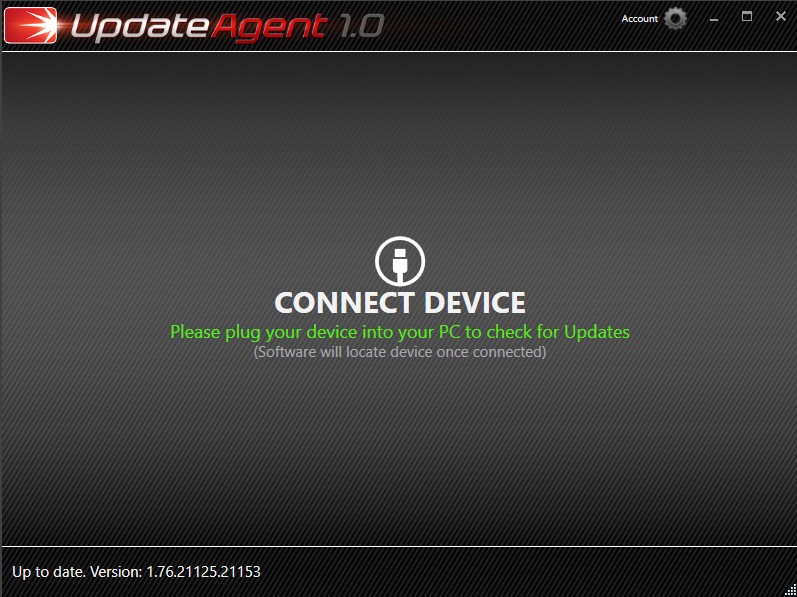
I downloaded “Update Agent” to my laptop and connected my Flashcal via USB. The software immediately recognized updates and ran them. So far, so good. Then it prompted me to connect to the Superchips Store. Perfect. Except…the only thing the store offered was a one-year extended warranty for $19.95. No Flashpaq upgrade in sight. I poked around everywhere, but no luck. What threw me off is that Holley’s own content had me believing this was exactly how the upgrade worked. The messaging made it sound like you just plug in, run Update Agent, and boom — you’re a Flashpaq owner. Nowhere in plain sight did it say you’d also need a PCM swap. Unless you happened to stumble on one specific article buried in Holley’s site, there was no mention of hardware being involved at all. Even AI backed me up, pointing me back to the same instructions. Everything made it seem like the software alone would do the trick.
Day 2: Asking for Help
I emailed tech@superchips.com, explaining that I owned a Superchips Flashcal 3571 and wanted to upgrade to a Flashpaq. For context: the Flashcal is a calibrator. It handles tire size, gear ratio, TPMS adjustments — things you need after mods. The Flashpaq is a tuner. It does all that plus performance tuning — fuel, timing, throttle response, and transmission shift points.
Day 3: The Surprise
The next day, Holley support responded and told me to call. I did. Neil, the rep, explained the process: the upgrade would cost $349.95, and I’d also need a PCM swap. This was news to me. I had $150 stuck in my head, though that was never officially quoted by Holley — just something I must’ve picked up from old content. Sure enough, newer Holley articles showed the actual price of $349.95.
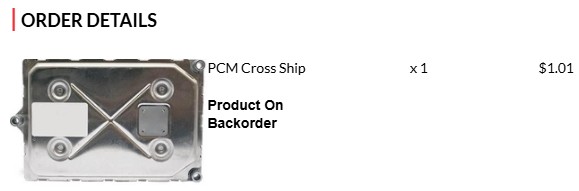
Neil described the PCM swap casually: “Three bolts and two connectors.” Sounded simple enough. I gave him my payment info, and he said I’d get a few emails outlining next steps. Soon after, I received instructions to reconnect my device, apply the purchase, and wait for my PCM. Estimated arrival: 5–8 business days. Except…it was also listed as backordered. Great.
Day 6–7: The Arrival
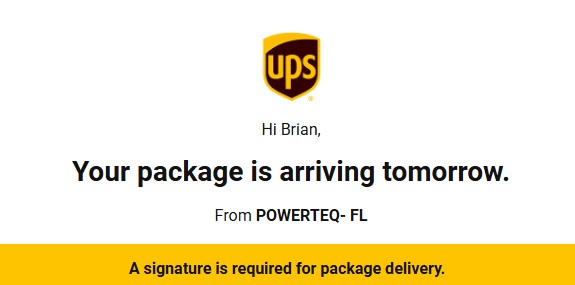
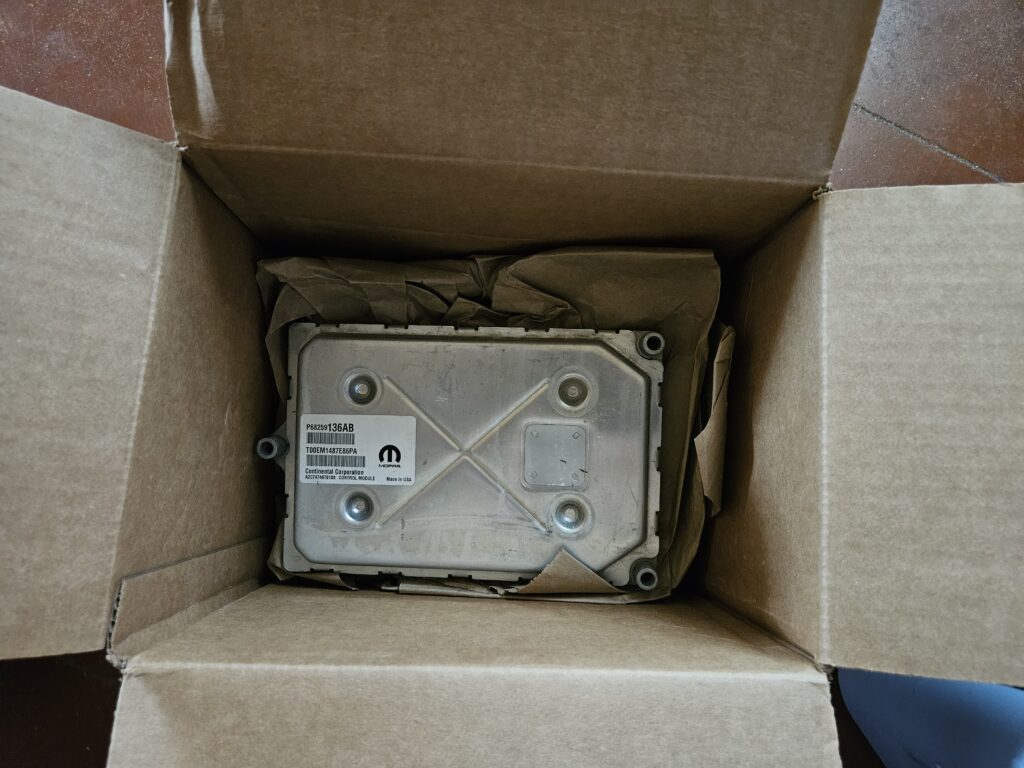
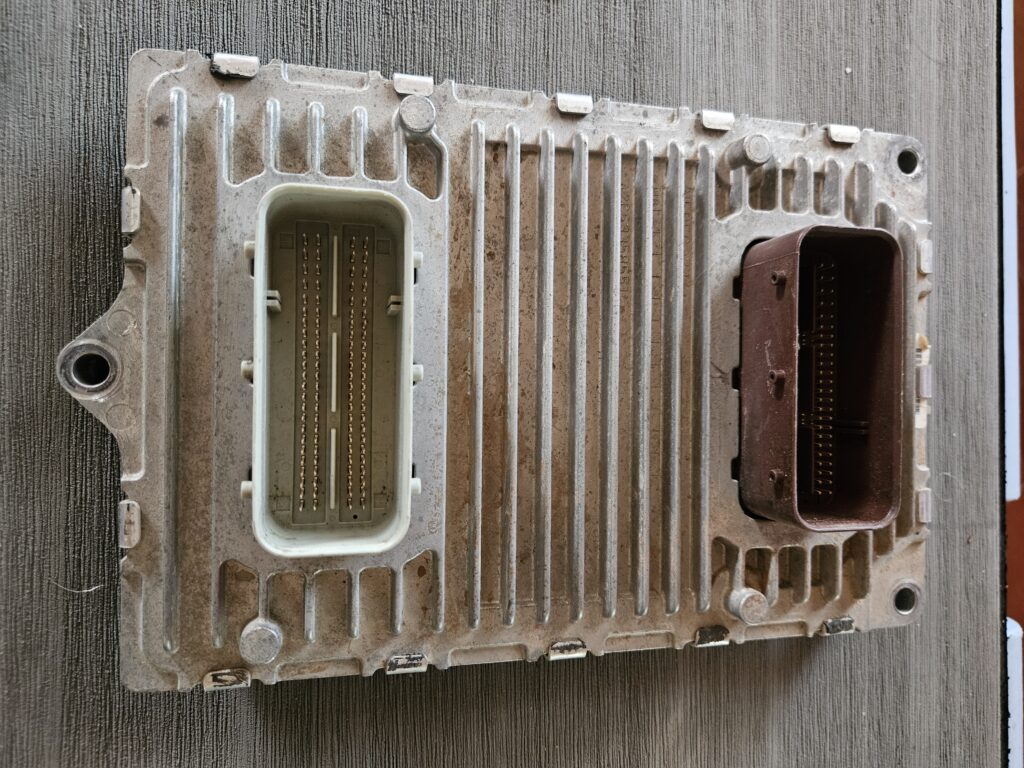
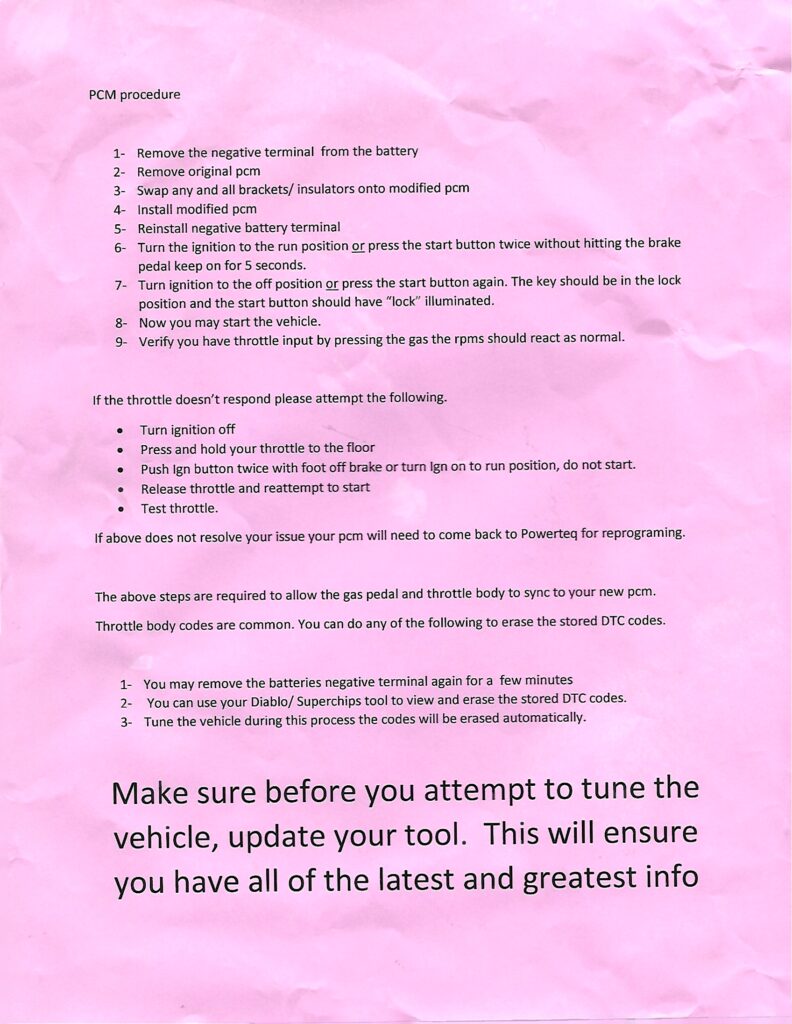
A UPS alert finally showed a shipment from POWERTEQ-FL — Holley’s parent group. No email from Holley, just UPS. At least something was on its way. A few days later, the PCM arrived. My expectations were high — this was Holley, after all, the company behind DiabloSport. I envisioned a sleek, high-tech unit. What I got looked like a used PCM pulled from another Jeep. Because it was. Included paperwork confirmed it: “You will not be getting a new PCM. In most cases, the PCM you receive will be from another vehicle.”
Honestly, that part doesn’t bother me. What bothered me was the lack of clear expectations up front. If Holley had just told me that earlier, it wouldn’t have been a disappointment.
The Fine Print
The paperwork hammered one thing over and over: the $600 core charge. Fail to return the old PCM in 14 days? $600. Return it scratched or dirty? $600. Send it to the wrong address? $600. Junkyard markings? $600. For a company that buried the upgrade process in vague instructions, they sure were clear on the penalties.
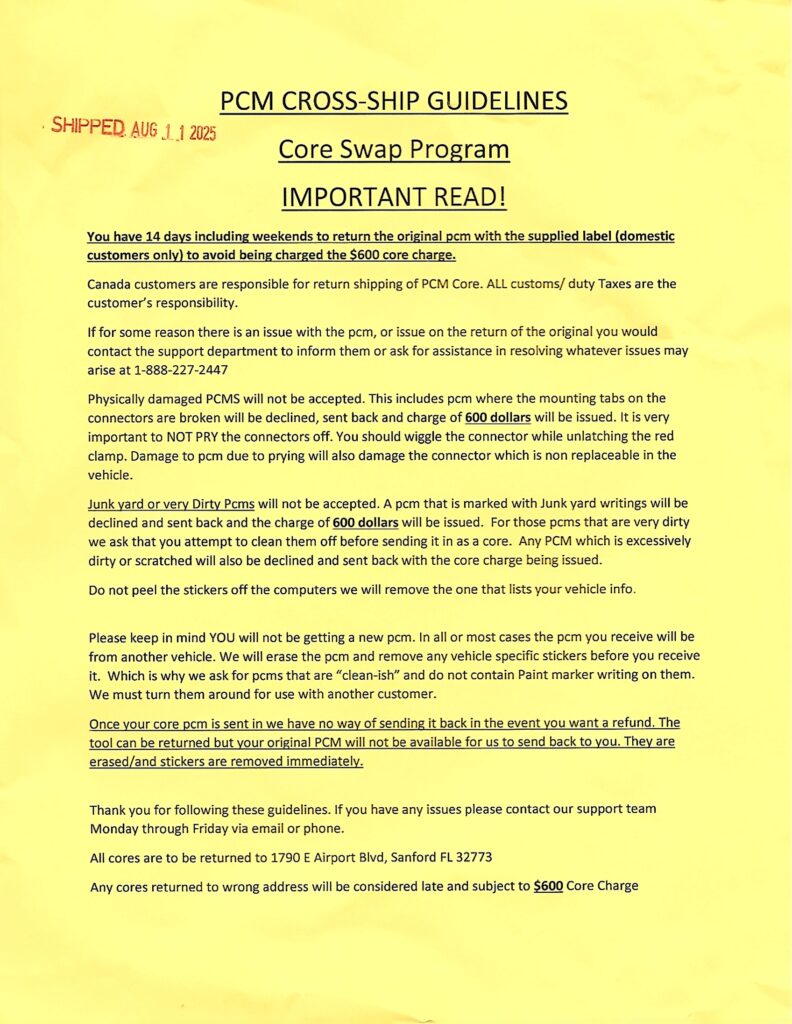
By the way, when exactly do those 14 days start? Date shipped? Date received? Nothing clarified. Mine was stamped shipped 8/11/2025 but didn’t arrive until 8/13. Details like that matter when $600 is hanging over your head.
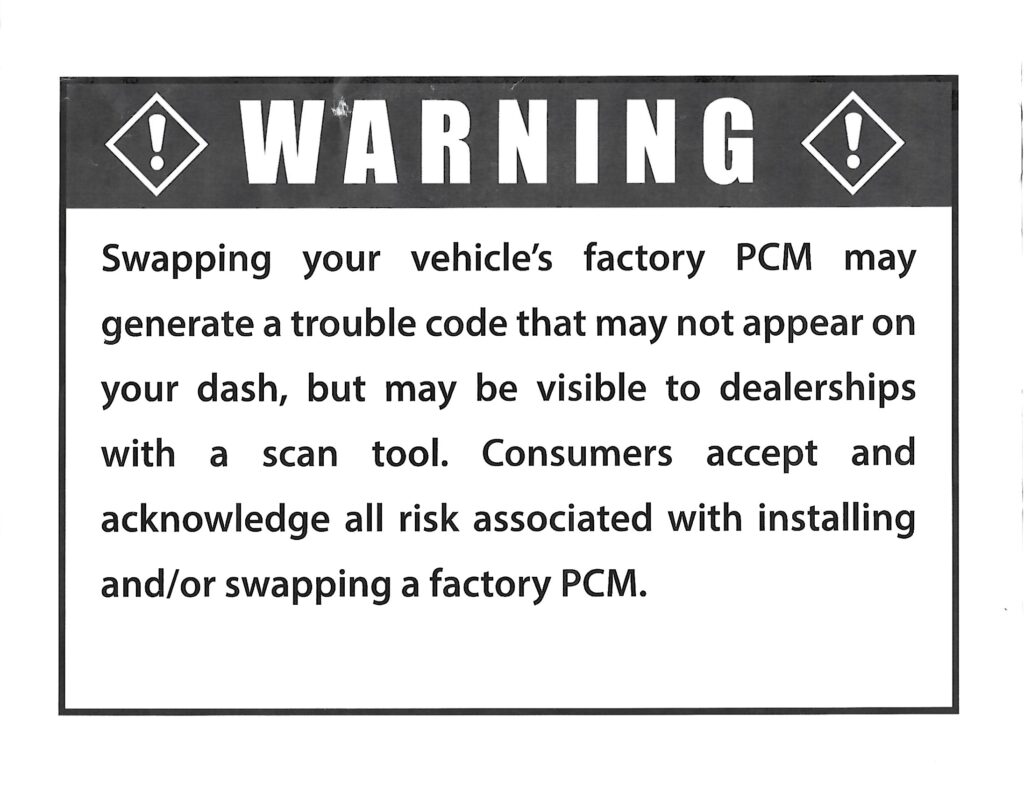
Day 8–9: The Swap From Hell
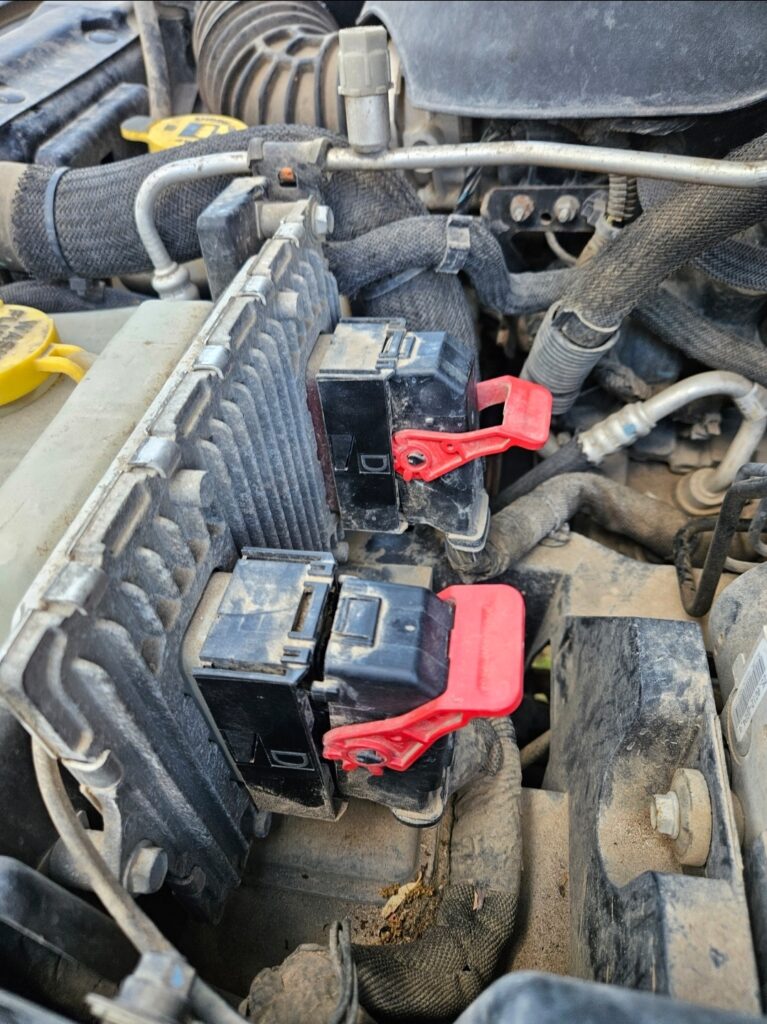
Neil’s “three bolts and two connectors” turned into a full-on war. I read the instructions. I watched the videos. Even the one from DiabloSport, a Holley company, supposedly tailored to my exact Jeep. Every single one of them made it look like a three-minute cakewalk. Pop the hood, flip the lever, wiggle, done. In reality, it was an absolute nightmare. The connectors on my 2017 Wrangler were cooked brittle from Texas heat, packed with years of desert dust, and those cute little red locking levers did not glide up like in the videos. They snapped. Everything snapped. And here’s the kicker nobody mentions: the red lever is not the whole system. Behind it is a cog and two tiny blue and green sliders that have to move just right, all the way downward, or that connector will never let go. If those sliders will not budge or the lever breaks, you are done. No amount of wiggling will save you. You end up breaking plastic, prying with picks, dumping solvent, and eventually destroying the housing just to win the battle. I spent two days at war with those connectors. By the end, I had a zip tied mess and a factory PCM scratched, exactly like the “refurbished” one they sent me. Suddenly those flawless three minute videos felt like a scam. They showed the Disney version. What I went through was the director’s cut. Unedited, ugly, and a hell of a lot more real.
Day 10–11: First Drive
Once installed, I fired it up. The throttle responded fine. A test drive around the neighborhood was smooth. Then a highway run — also fine. When I tried to tune, though, the device threw VIN lock errors that made me think I’d need to pay another $108 for a VIN unlock. Panic. Running Update Agent again solved it, downloading 252 files. After that, the Flashpaq worked as expected.
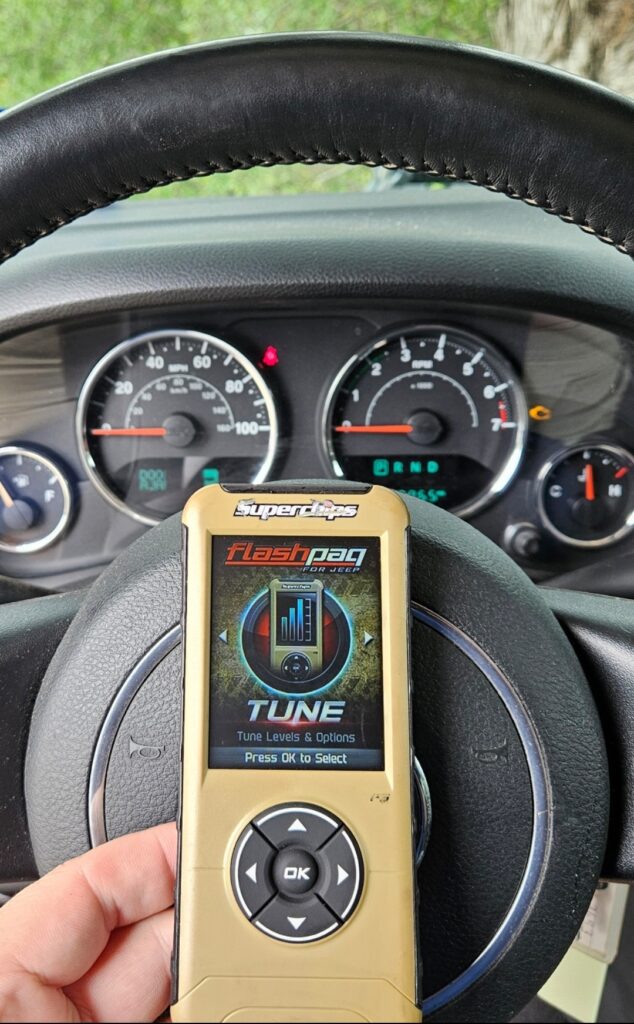
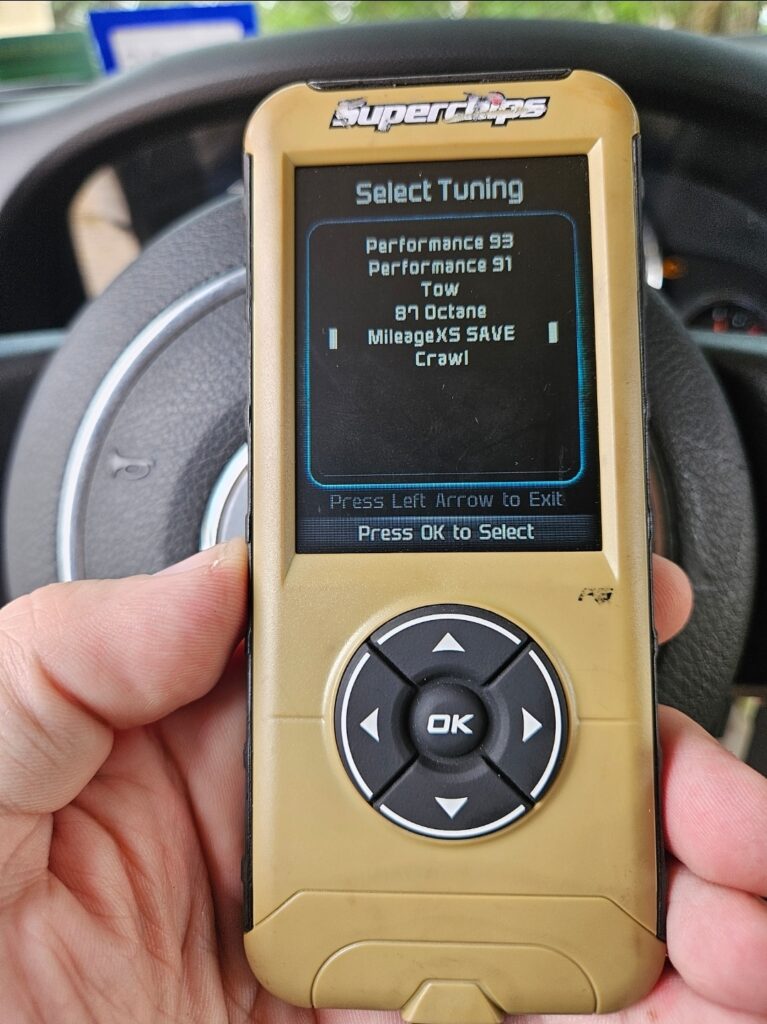
My tuning options included Performance 93, Performance 91, 87 Octane, Tow, Crawl, and MileageXS SAVE. Since I was not immediately towing or rock crawling, I decided to focus on what would benefit me most right away. I chose MileageXS SAVE, hoping for smoother shift points and better fuel economy. On a 150-mile round trip to Kerrville, I noticed exactly that: smoother shifts, better uphill pulls, and less stress on the drivetrain. Promising start.
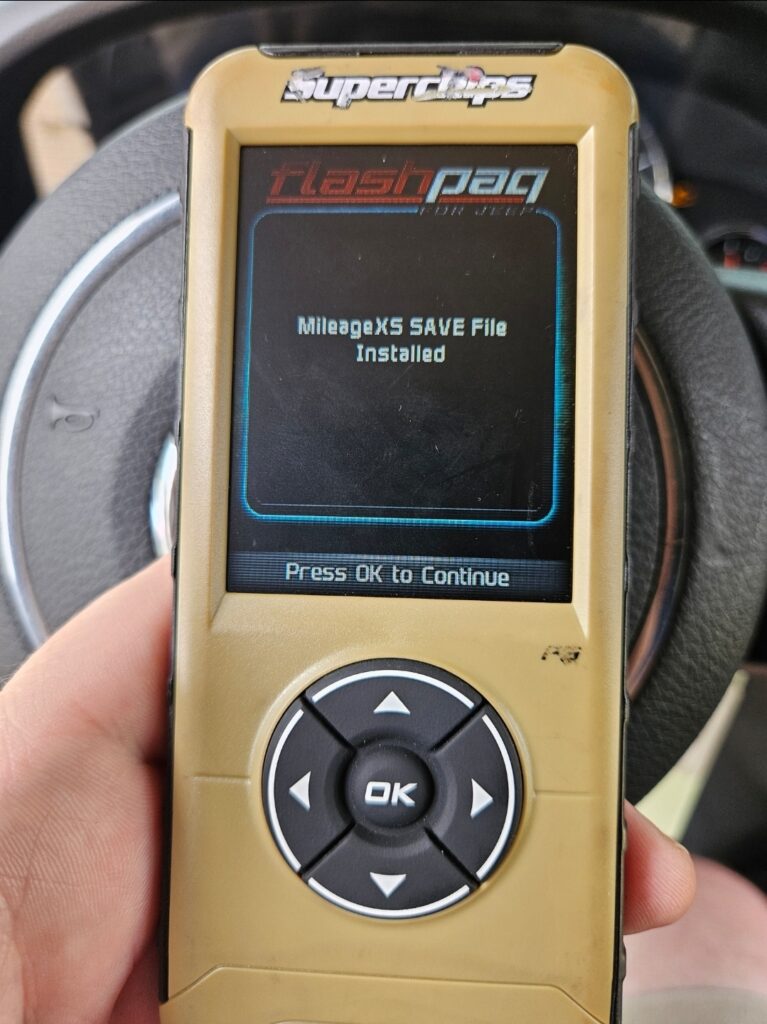
Day 12: The Return Saga
Now it was time to send back my PCM to avoid the $600 core charge. Easy, right? Not where I live. My county has 2,700 people and one UPS drop box that doesn’t even fit a PCM box. The UPS truck only comes three days a week. Scheduling a pickup at my house? $32.50. Even with a prepaid return label! So, I drove over an hour to the “big city” with its Dollar Generals just to drop off the package. I tracked it to Louisville, then Sanford, FL. Crisis averted.
Consensus
Before starting this process, I thought, “Why didn’t I do this sooner?” Now I know. The upgrade works. I’ve seen smoother shifts and better efficiency — but the process was frustrating, expensive, and poorly explained. Holley needs to tighten up communication and set better expectations.
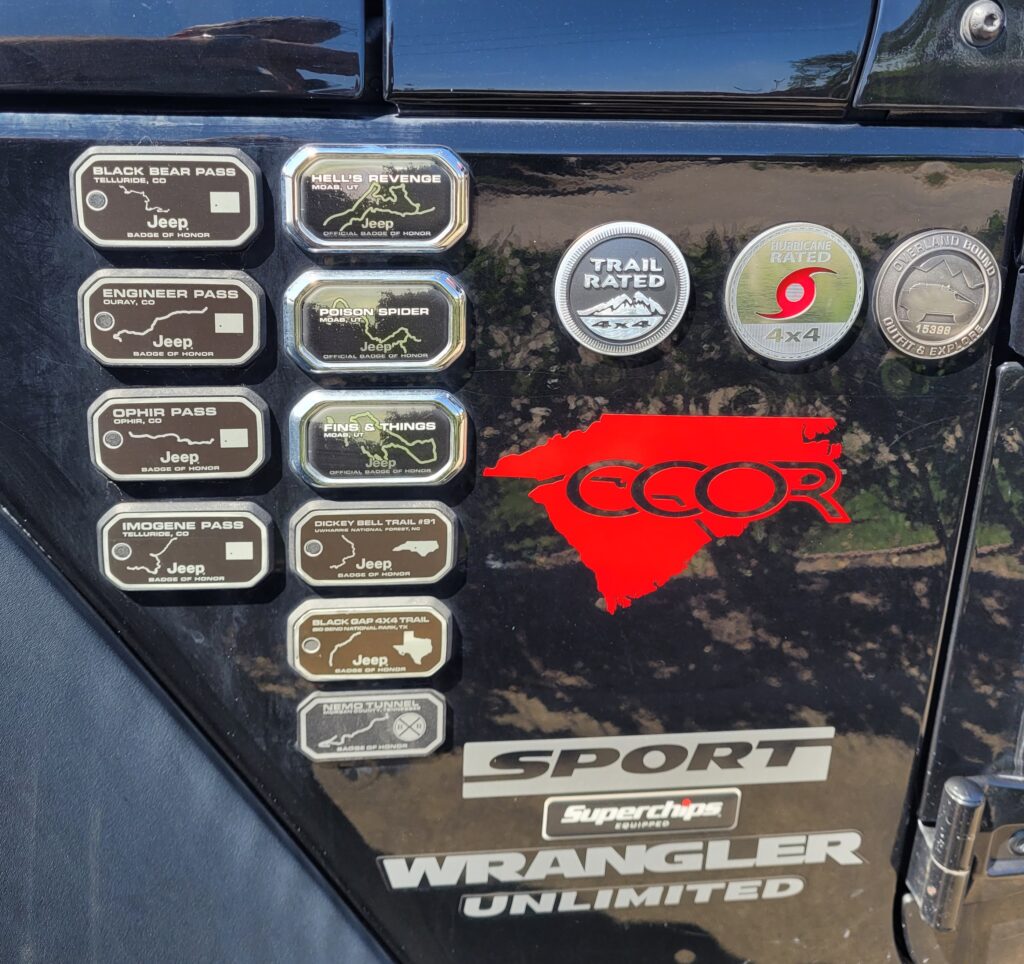
That said, I still love the brand. Holley is right there with baseball and apple pie. It’s pure Americana. When I hear “Holley,” I don’t just think about a part — I think bad ass. I think about the smell of gas, weekend wrenching in the driveway, and the kind of muscle cars that plastered my bedroom walls as a kid. And Superchips? Man, I can’t hear that name without flashing back to Carl Edwards wheeling the Superchips Ford in the NASCAR Craftsman Truck Series. That sticks with you. It’s a brand that resonates with me on a gut level. So yeah, I was frustrated with the unclear instructions and disappointed that expectations weren’t set better.
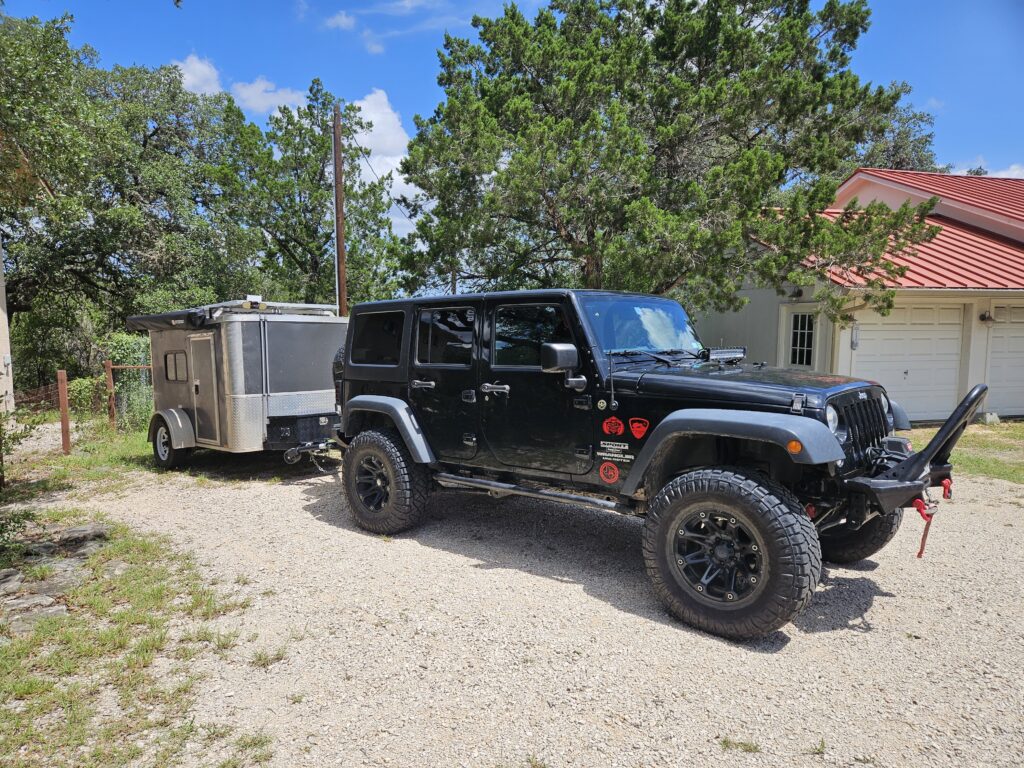
Time will tell if this was the best upgrade I’ve done. I’ve only tested one tune over 150 miles, but I’ve got 1,400 miles of towing ahead and some rock crawling right after that. Tow mode and Crawl mode will get their turn. For now? I’d do it again. Hopefully, this 4×4 experience gives others a clearer picture of what’s involved before diving in.
Let me know your experiences if you’ve also used a Flashcal to Flashpaq conversion.
Fuel for the Next Project
Whether you are waiting on a part or wrenching in the driveway, you will want coffee. My 4×4 Experience Coffee is available right here on the site: honest, no-hype coffee for early trailheads and long drives home.
Follow the Adventure
New trail reports, gear notes, and Moab updates go up on the My 4×4 Experience Facebook page first. Come along for the next one.
Related reading: Jeep Wrangler vs. Toyota Tacoma: What I’ve Learned Owning Both and Sway Bars and Off-Roading: What You Need to Know (Before You Hit the Trail).